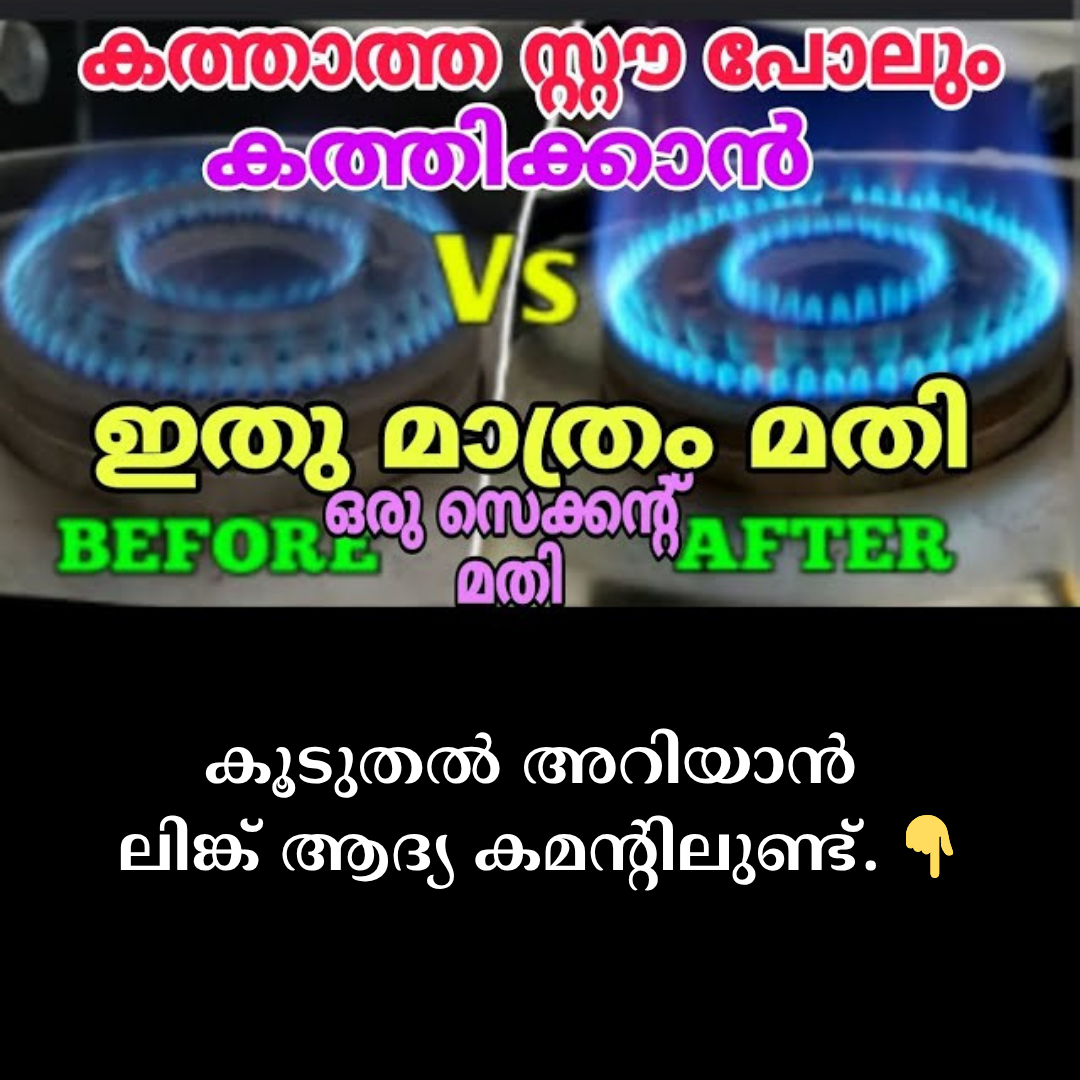
This is the most important reason. Oil or curry that splashes from the pan while cooking clogs the small holes in the burner. This obstructs the flow of gas.
Solution: Remove the burners, add a little hot water and soap solution, and scrub them thoroughly with an old toothbrush. If the holes are clogged, use a needle to pierce them one by one and clean them.
2. Obstructions in the gas hose (Tube)
If there is a bend or kink anywhere in the tube that carries gas from the gas cylinder to the stove, the gas pressure will decrease. Similarly, if substances such as glue accumulate inside the tube due to aging, the fire will decrease.
Solution: Check if the hose is bent. If it has been more than 5 years since the hose was replaced, definitely replace it with a new one.
3. Air-Gas Mixture Error
There is an adjustment screw (Air shutter) under each burner to mix air and gas in the correct amount. Sometimes, dirt or dust gets stuck in this. This can cause the fire to turn yellow and the fire to decrease due to not getting enough air.
Solution: Slowly move the small metal part (Air shutter) below the burner back and forth. Make sure that the fire burns blue.
4. Gas regulator error (Regulator Issue)
If the regulator in the cylinder is not working properly, the gas will not reach the stove with sufficient pressure.
Solution: If the fire is low even after replacing the cylinder, try replacing the regulator. (Ensure safety before doing this).
5. Gas in the cylinder is running out
If the gas in the cylinder is low, the pressure will naturally decrease and the fire will decrease.
Solution: Lift the cylinder and look. If the weight is very light, you can be sure that the gas is almost gone.
Safety Warning:
If the flame does not come out as before even after cleaning the burners and tubes, the gas valves (Knob) in the stove may be damaged. In such a case, do not try to disassemble and repair it yourself, but seek the help of an authorized technician.