1. Head Shape
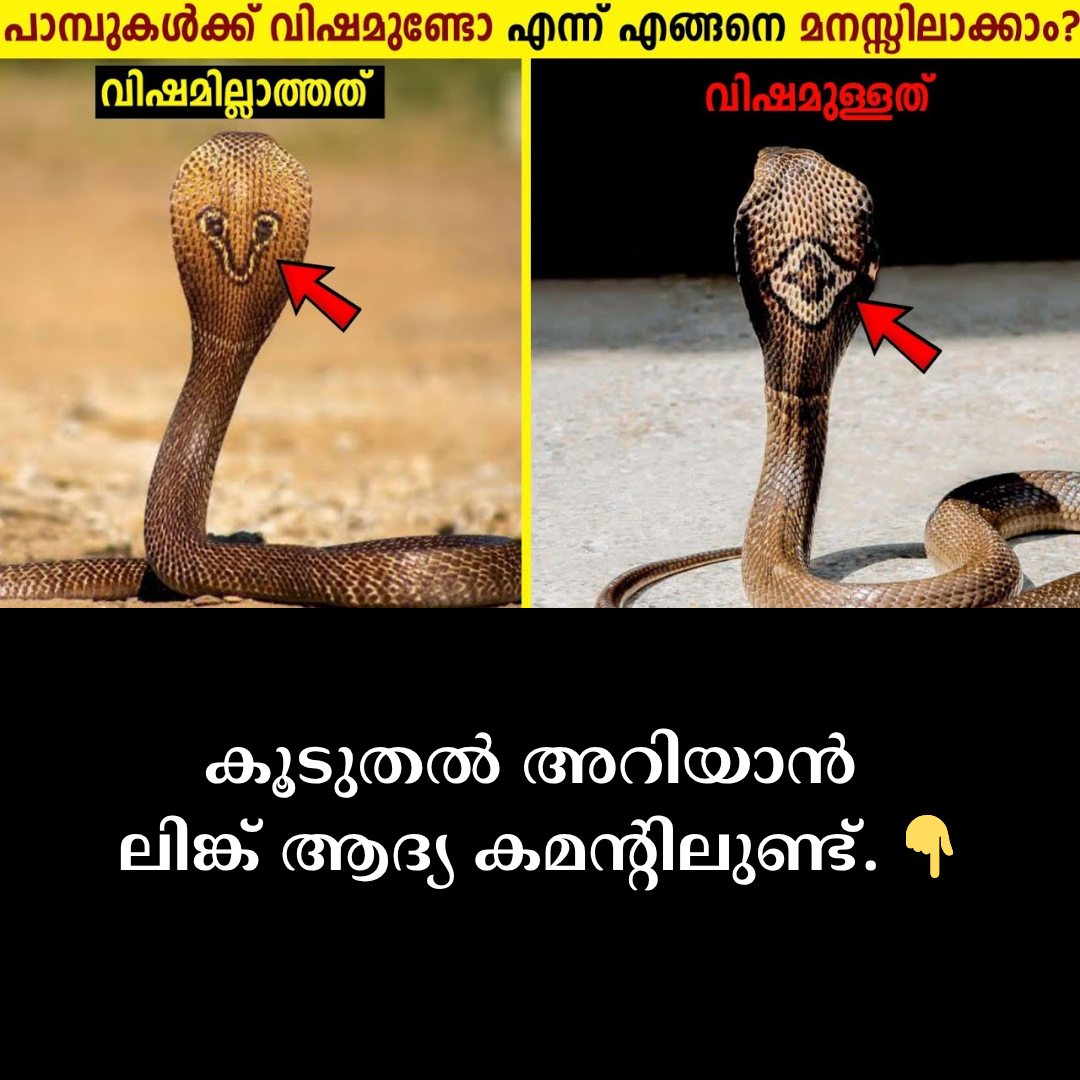
Poisonous Snakes: Most venomous snakes have a triangular head. The venom glands are located on the sides of the head, so the head is slightly wider (for example, vipers). However, this does not apply to all snakes (for example, king cobras and cobras have long heads).
Non-venomous Snakes: Their heads are mostly oval/round. The head sits flush with the body.
2. Pupil Shape
Poisonous Snakes: Venomous snakes that move during the day usually have a vertical slit/cat-like pupil.
Non-venomous Snakes: Their pupils are round in shape.
3. Tail Shape
Poisonous snakes: Their tails are sharply pointed.
Non-poisonous snakes: Their tails taper gradually from the body and become pointed.
4. Belly Scales
Poisonous: The scales on the belly are found in large pieces (Full width of the belly) and extend to the end of the snake.
Non-poisonous: The scales on the belly are often divided into two from the beginning of the tail.
Crucial Warnings:
The rule does not apply: The above is just a general observation. There are many exceptions in nature. For example, the heads of the highly poisonous cobra and king cobra of our country are not triangular in shape. Therefore, it is dangerous to try to identify a snake based on these clues.
Diagrams: Sometimes non-venomous snakes can behave like venomous snakes or have similar body structures (e.g., rattlesnakes).
Best practice: If you see a snake, get away from it immediately. Do not try to determine if a snake is venomous yourself. Only seek the help of professional snake catchers.