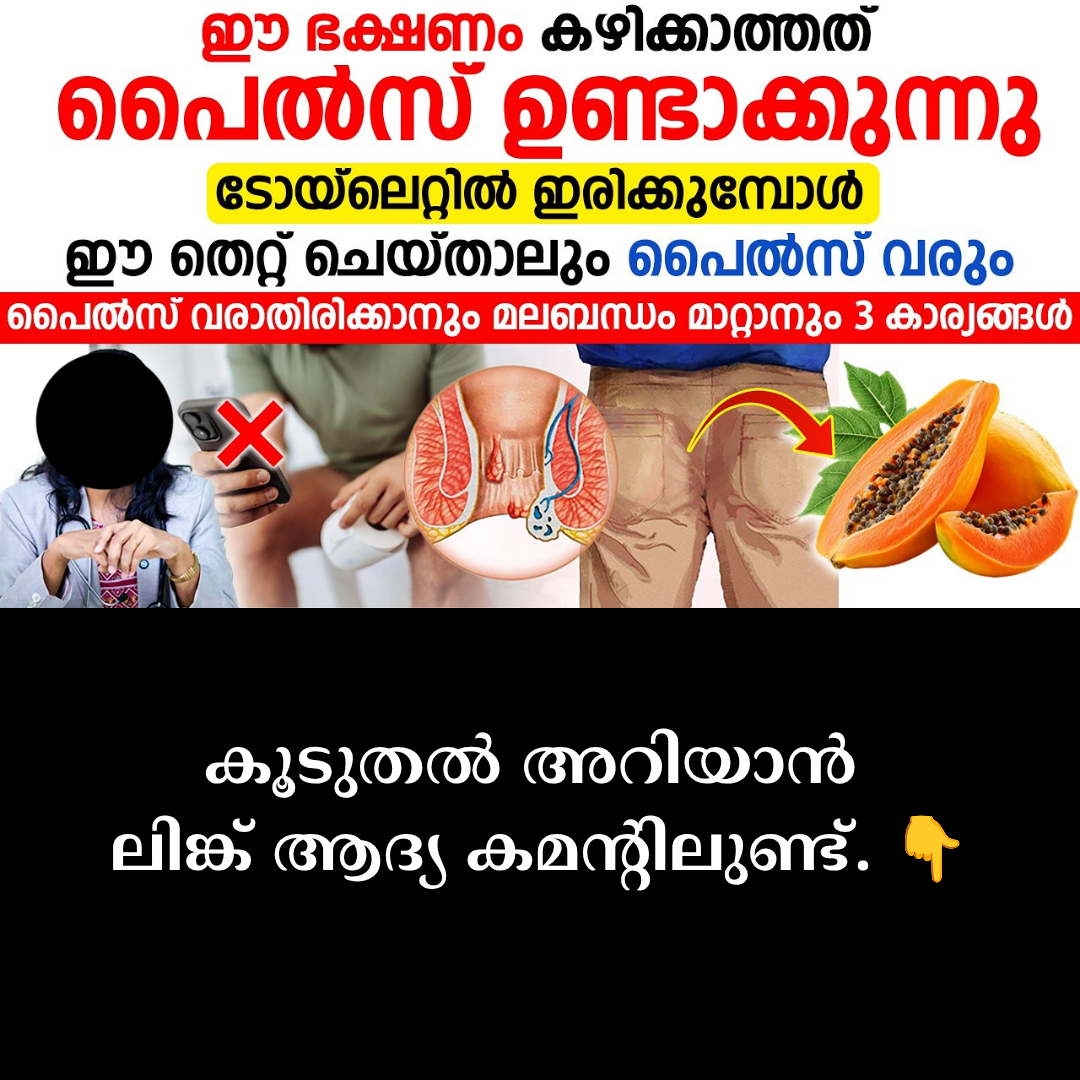
Piles are a major health problem that many people are reluctant to talk about, but they cause severe physical difficulties for those who suffer from them. Scientifically, they are called hemorrhoids. This is a condition in which the blood vessels in and around the anus become swollen and swollen and they protrude downwards. The main symptoms of this are painless, bright red blood when passing stools, and a feeling of tightness and itching around the anus. Here are the 5 main scientific reasons behind piles:
Chronic Constipation & Straining: The most important scientific reason for piles is chronic constipation. When the stools become hard due to a low-fiber diet or lack of water, the muscles in the anus have to strain excessively to expel them. The intense pressure during this time causes the blood vessels in the anus to swell and slowly push them out, causing them to become piles.
Prolonged Sitting on Toilet: A major reason for the increase in piles in today’s youth is the habit of sitting on the commode for a long time while looking at the mobile phone. When you sit on Western-style toilets with your legs hanging down for more than 10-15 minutes, the blood flow to the anus increases due to natural gravity and the blood vessels there become overloaded and swell quickly.
Low Fiber Diet and Fast Food: Consumption of flour, gourd, bakery sweets, fast food, excessive chicken and beef slows down the digestive process. Since these foods do not contain any fiber, the amount of stool decreases and it dries up in the intestines. This leads to piles through constipation.
Pregnancy & Increased Intra-abdominal Pressure: Women are more likely to develop piles during pregnancy. As the uterus grows, there is a lot of pressure on the blood vessels in the abdomen. Along with this, the progesterone hormone changes during pregnancy cause the blood vessels to relax and increase constipation. This usually goes away on its own in most people after delivery.
Obesity and a sedentary lifestyle: When you gain too much weight, it puts constant pressure on the blood vessels in the pelvic area. Along with this, people who sit for hours at a time, like IT employees, and those who lift heavy weights, are more likely to develop piles due to weakening of the blood vessels in the anus. It is also possible to develop piles if someone in the family has this problem.
https://youtu.be/LK2Z86JRQEk