The Geminid meteor shower 2026 peak falls on the night of Sunday, December 13, into Monday, December 14, 2026. In the United States, start looking around 9 or 10 p.m. local time Sunday if the sky is clear. For a later session, go out after midnight and before dawn Monday. NASA estimates about 40 to 50 meteors an hour under dark skies.
Featured image: A composite of the 2014 Geminid shower. Credit: NASA/MSFC/Danielle Moser, NASA Meteoroid Environment Office.
When should you go outside?
- Sunday evening: Plan a short session around 9 or 10 p.m. local time, especially if you are watching with children.
- Early Monday: Try again after midnight if the evening is cloudy or you want a longer session.
- If peak night is cloudy: Watch on another clear night near the peak. NASA lists activity from December 4 through 17. Expect fewer meteors away from peak night.
Where should you look?
Choose a spot with a broad view and few nearby lights. Let your eyes adapt for about 30 minutes and look up with the naked eye. The meteors appear to come from Gemini, but can streak across other parts of the sky. Give yourself time to watch a wide area because meteors can arrive in bursts.
What causes the Geminids?
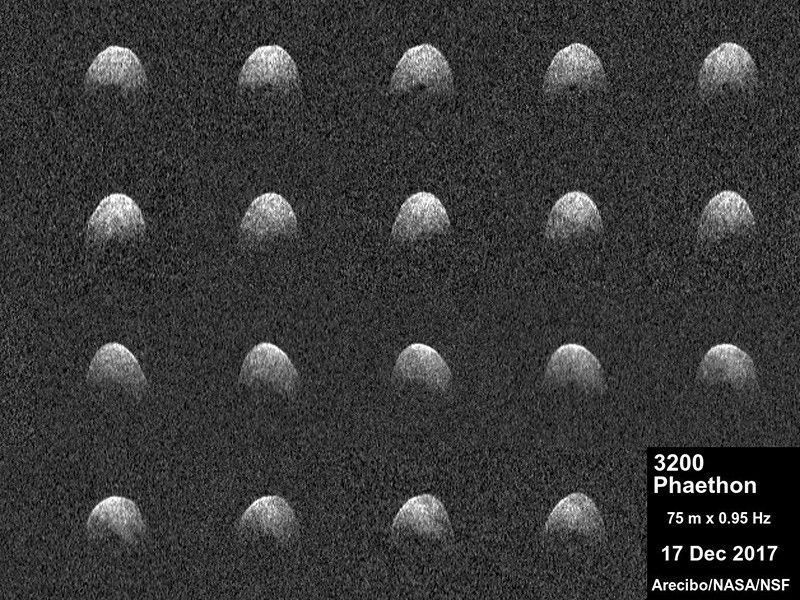
Earth passes through debris associated with 3200 Phaethon. When particles reach Earth’s atmosphere, they produce the streaks you see from the ground.
Before you leave
Check your local cloud forecast, dress for the temperature, and pick a dark location that’s open at night. If you can only spare a short window, choose the clearest part of the night rather than holding out for a specific minute.
Peak dates, rates and viewing guidance: NASA Science’s Geminid meteor shower guide.